





McIntosh MC451 Dual Mono Power Amplifier
- Type: Hybrid Drive
- 150 Watts x 1-Channel Vacuum Tube Amplifier and 300 Watts x 1-Channel Solid State Amplifier
- The ultimate solution for bi-amping loudspeakers
- Vacuum tube section powers midranges and tweeters; Solid state section drives power hungry woofers
- Autoformer™, Unity Coupled Circuit Output Transformer, Power Guard®, Sentry Monitor™, Monogrammed Heatsinks™, Solid Cinch™ speaker binding posts
Pairs well with
McIntosh MC451 Dual Mono Power Amplifier
If you have any questions, you are always welcome to contact us. We'll get back to you as soon as possible, within 24 hours on weekdays.
-
Shipping Information
Use this text to answer questions in as much detail as possible for your customers.
-
Customer Support
Use this text to answer questions in as much detail as possible for your customers.
-
FAQ’s
Use this text to answer questions in as much detail as possible for your customers.
-
Contact Us
Use this text to answer questions in as much detail as possible for your customers.
Overview
McIntosh MC451 Dual Mono Amplifier
Tube and Solid-State Amplification, Built to Bi-Amp One Speaker
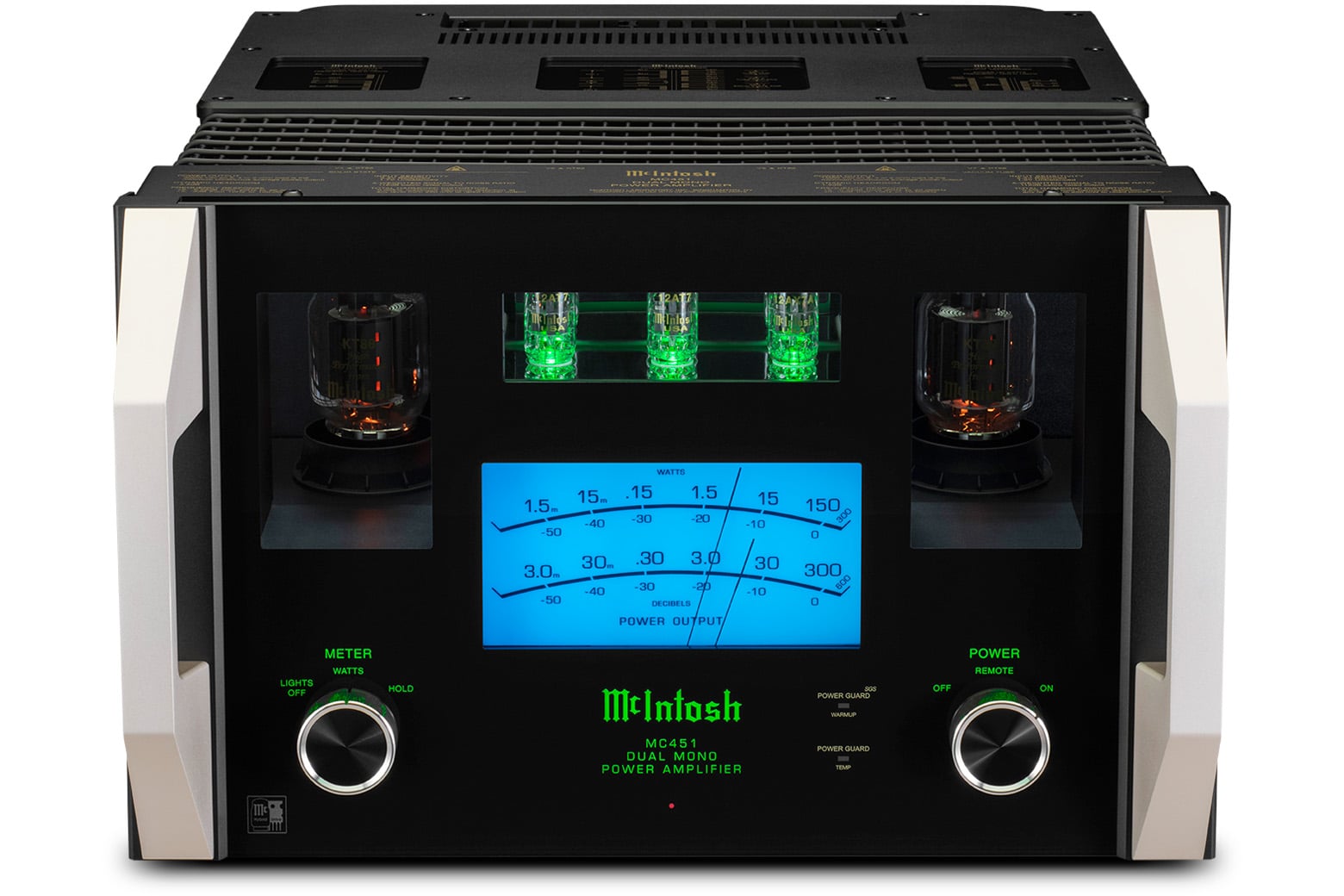
The McIntosh MC451 Dual Mono Amplifier is a different kind of power amplifier. Instead of choosing between vacuum tubes and solid-state amplification, McIntosh combines both technologies in a single chassis specifically designed to bi-amp one loudspeaker.
Each MC451 contains a 150-watt vacuum tube amplifier for the speaker's midrange and high-frequency sections and a 300-watt solid-state amplifier for the woofers. For a stereo system, a pair of MC451s provides dedicated hybrid amplification for both left and right speakers.
It's the same fundamental Hybrid Drive concept found in the massive MC901, packaged in a more conventional McIntosh form factor.
Why Combine Tubes and Solid State?
The idea behind the MC451 is straightforward: use each amplifier technology where its strengths are most valuable.
The 150-watt vacuum tube section powers the midrange and tweeter section of a compatible loudspeaker, while the 300-watt solid-state section handles the bass drivers.
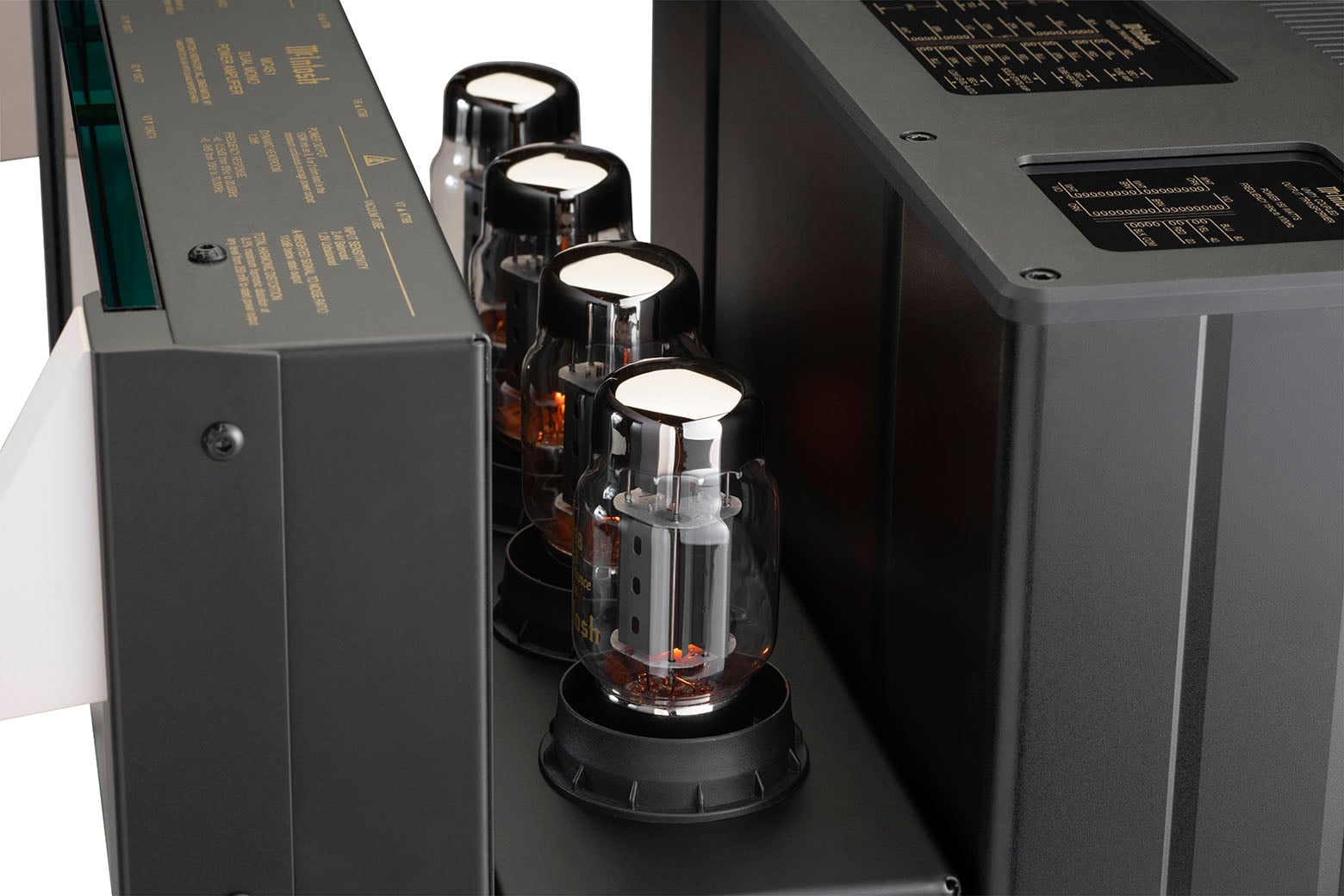
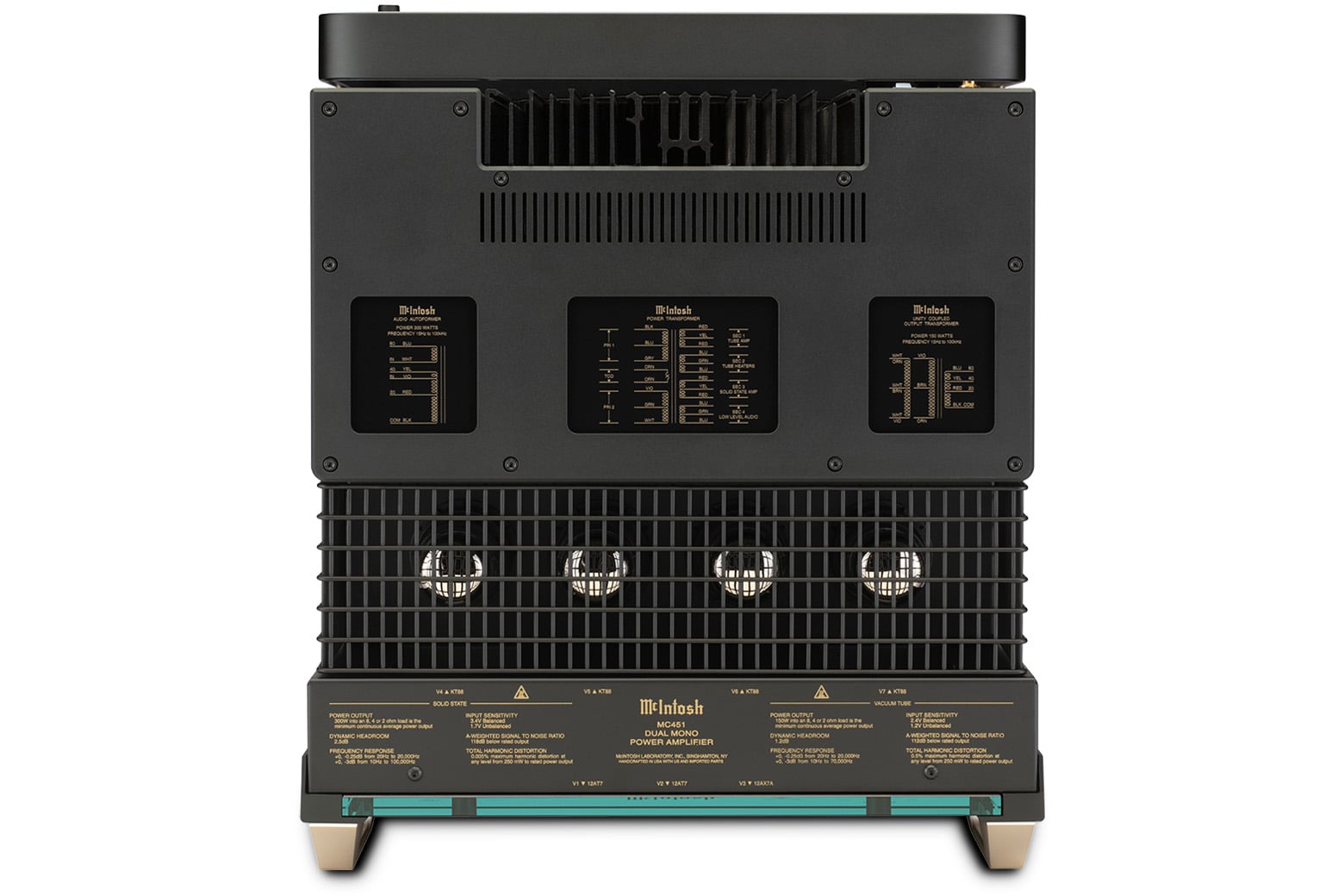
The tube amplifier uses four KT88 output tubes, along with two 12AT7 and one 12AX7A signal tubes. McIntosh's patented Unity Coupled Circuit output transformer allows it to deliver the full 150 watts into 2, 4, or 8 Ohms.
The solid-state amplifier uses a McIntosh Autoformer to deliver its full 300 watts into 2, 4, or 8 Ohms as well.
Rather than simply putting two unrelated amplifiers in the same box, McIntosh engineered both sections to operate together as one integrated amplification system.
Bi-Amping Without the Usual Complexity
Traditional bi-amping can get complicated quickly.
You need two amplifiers, additional cabling, proper gain matching, and potentially an external electronic crossover. Then everything has to be configured so each amplifier is operating within the appropriate frequency range.
The MC451 brings those functions together in one component.
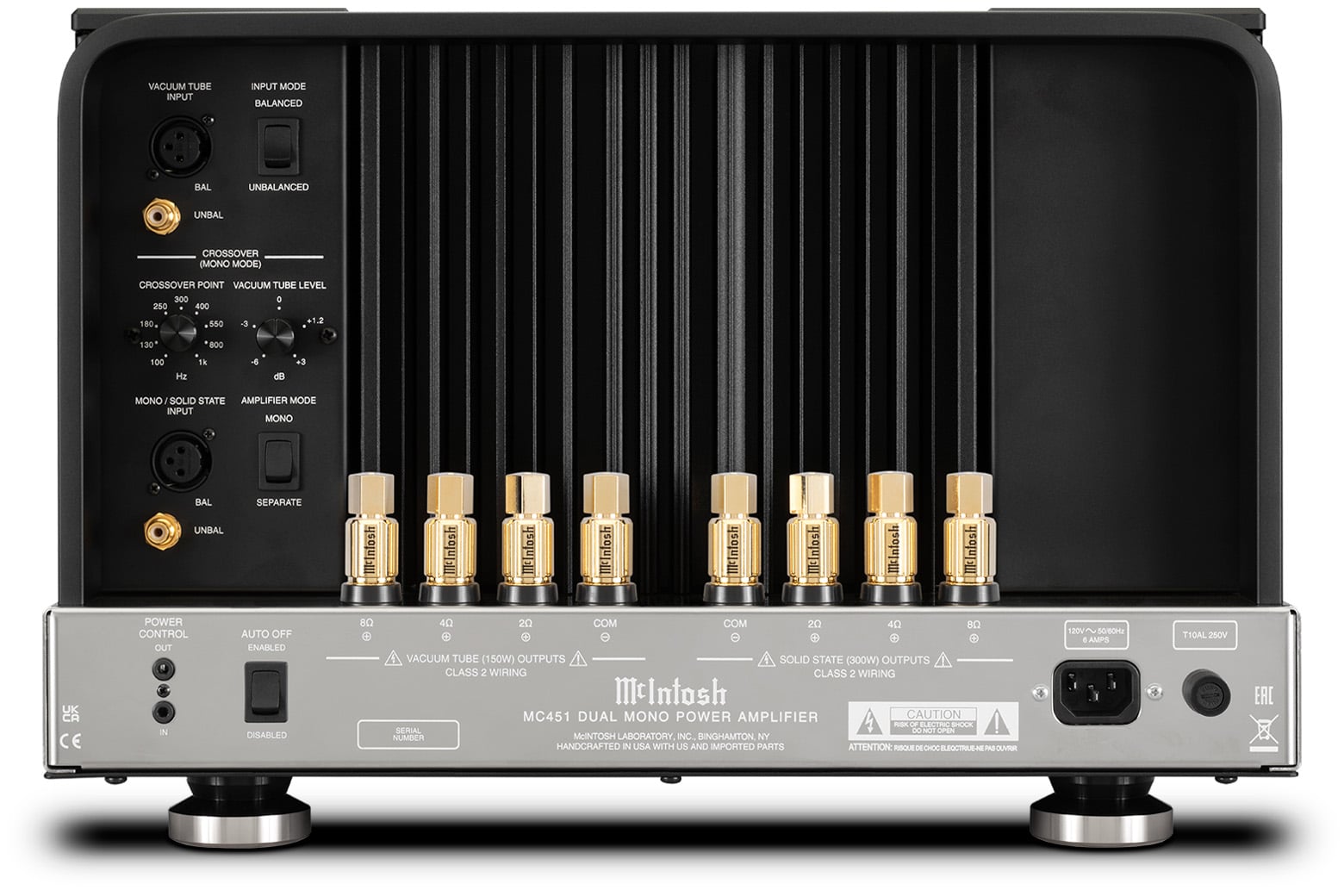
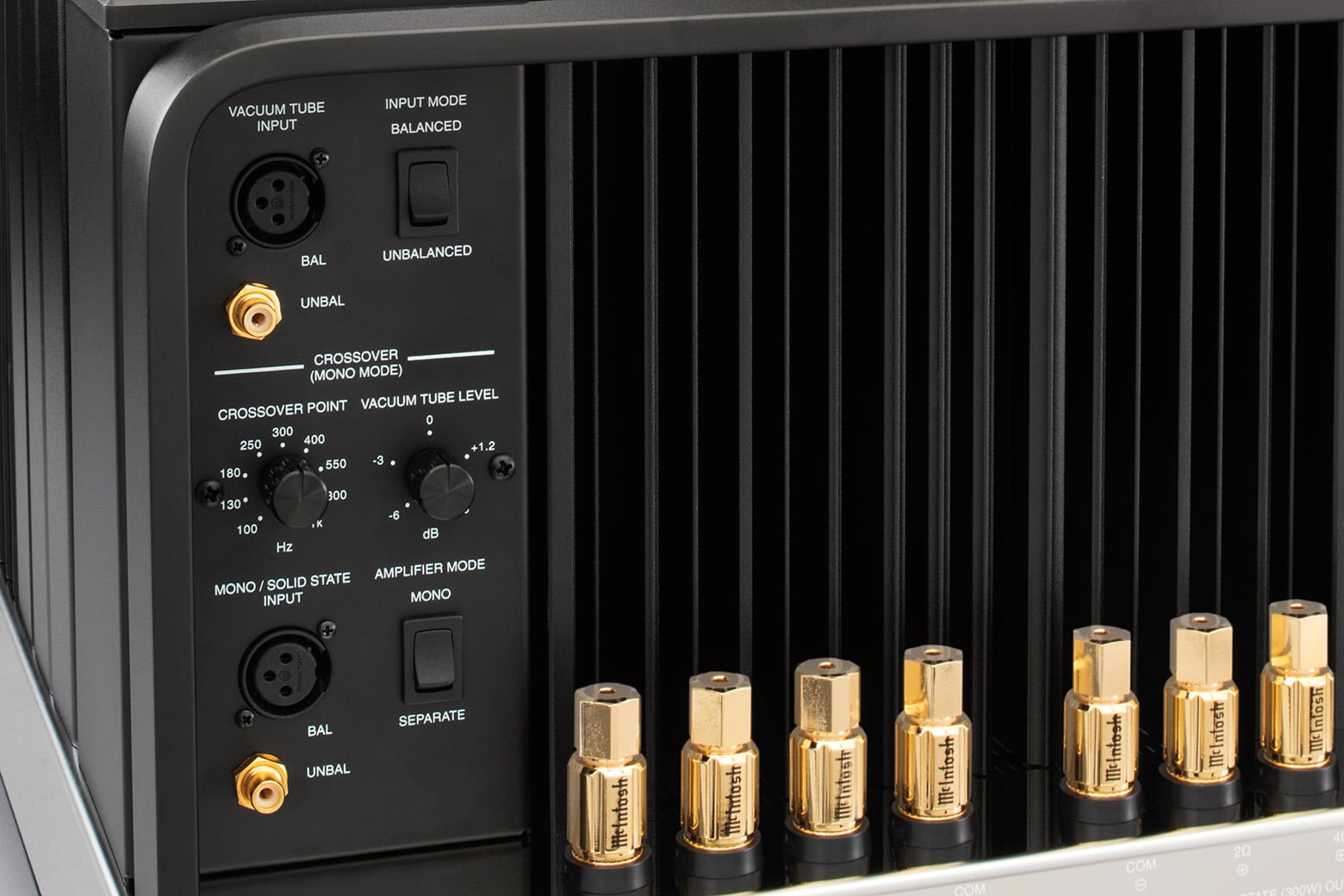
An adjustable internal crossover divides the incoming signal between the two amplifier sections. Set the rear-panel crossover control to correspond with the loudspeaker's crossover point, and the MC451 sends frequencies below that point to the 300-watt solid-state amplifier and frequencies above it to the 150-watt tube amplifier.
The result is a much cleaner approach to active bi-amplification.
Adjustable to the Loudspeaker—and Your System
The MC451 isn't locked into a single crossover configuration.
Its adjustable crossover allows the amplifier to be tailored to the requirements of the connected loudspeaker, while the tube amplifier's gain can be adjusted from -6dB to +3dB to properly balance the upper and lower sections.
For systems where crossover duties are being handled elsewhere, each amplifier section can also receive a direct input, bypassing the MC451's internal crossover entirely.
That flexibility makes the MC451 suitable for sophisticated systems where the owner or system designer wants greater control over how the amplifiers interact with the loudspeaker.
Independent Power Supplies for Both Amplifiers
Putting two powerful amplifier architectures into one chassis only works if one isn't compromising the other.
A large, low-noise toroidal power transformer supplies the MC451 with the resources needed to operate both amplifier sections simultaneously. The power architecture is designed so the demands of the 300-watt bass amplifier don't rob the tube section of the power it needs—and vice versa.
That's an important distinction between the MC451 and simply trying to assemble a bi-amped system from two conventional amplifiers.
DualView Power Output Meter
The MC451 also introduces an unusual variation of one of McIntosh's most recognizable features.
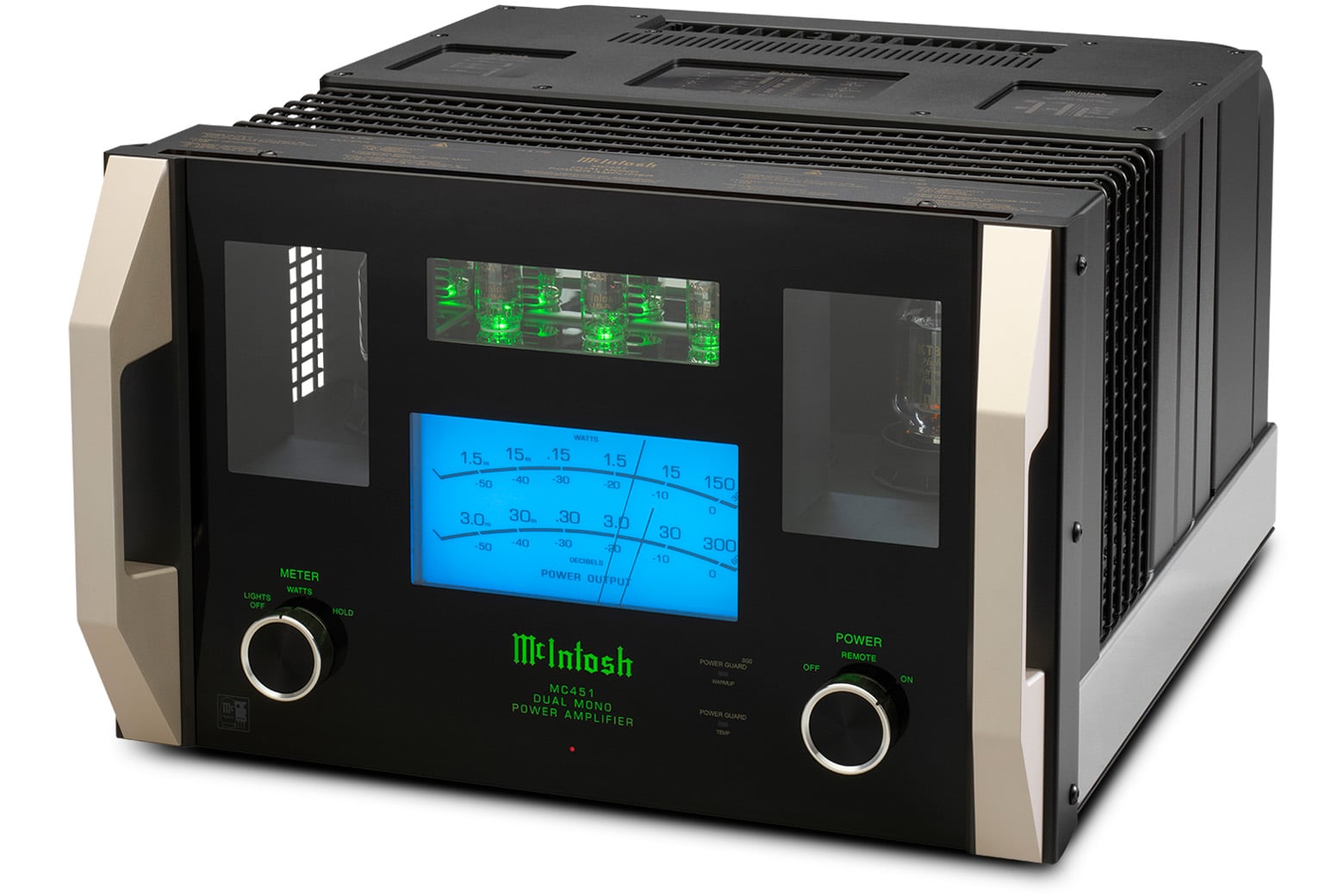
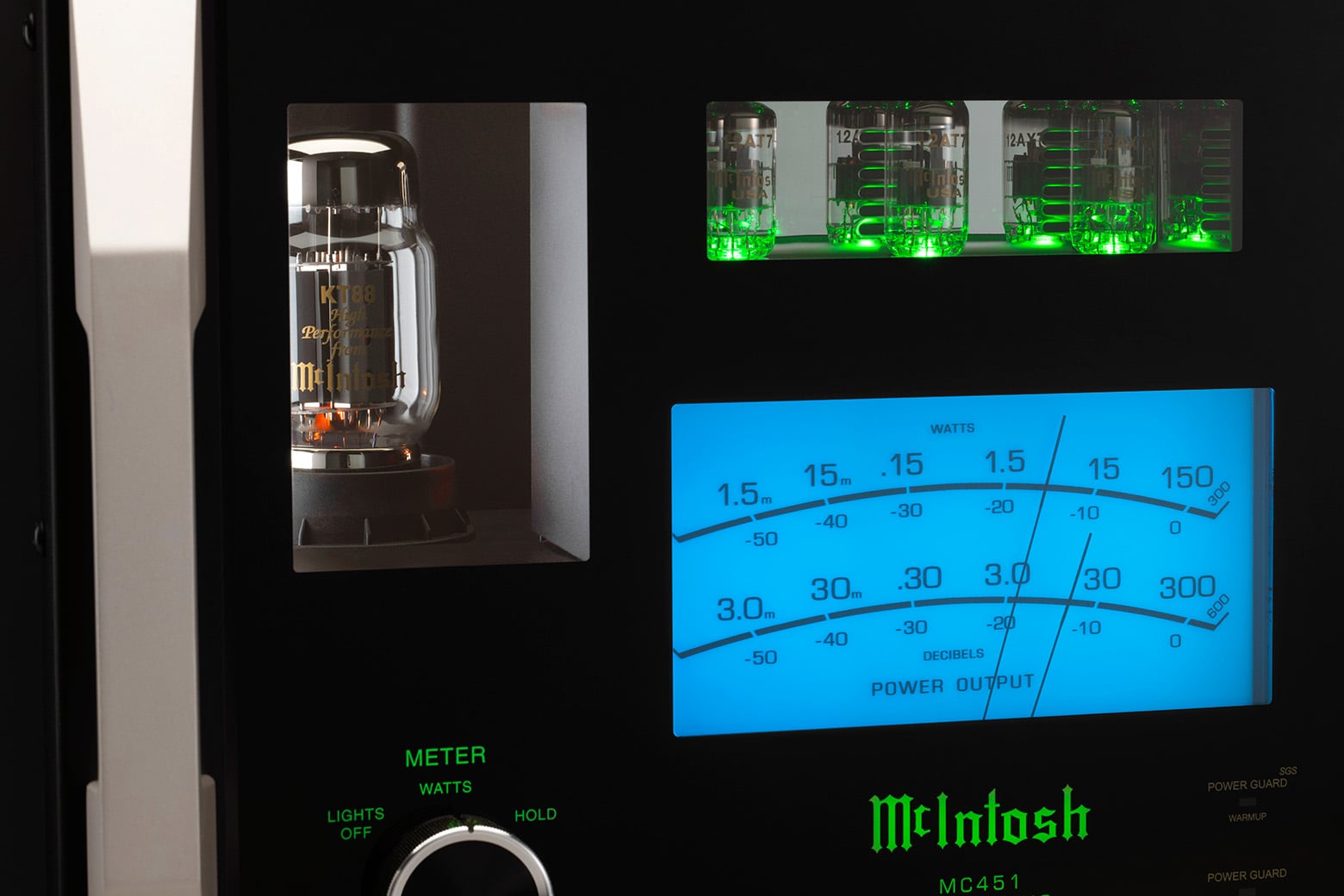
Its DualView Power Output Meter places two independent mechanical Watt meters within a single meter window.
One displays the real-time output of the 150-watt tube amplifier, while the other tracks the 300-watt solid-state section.
You can literally watch the power demands being divided between the high- and low-frequency sections of the speaker.
Unmistakably McIntosh
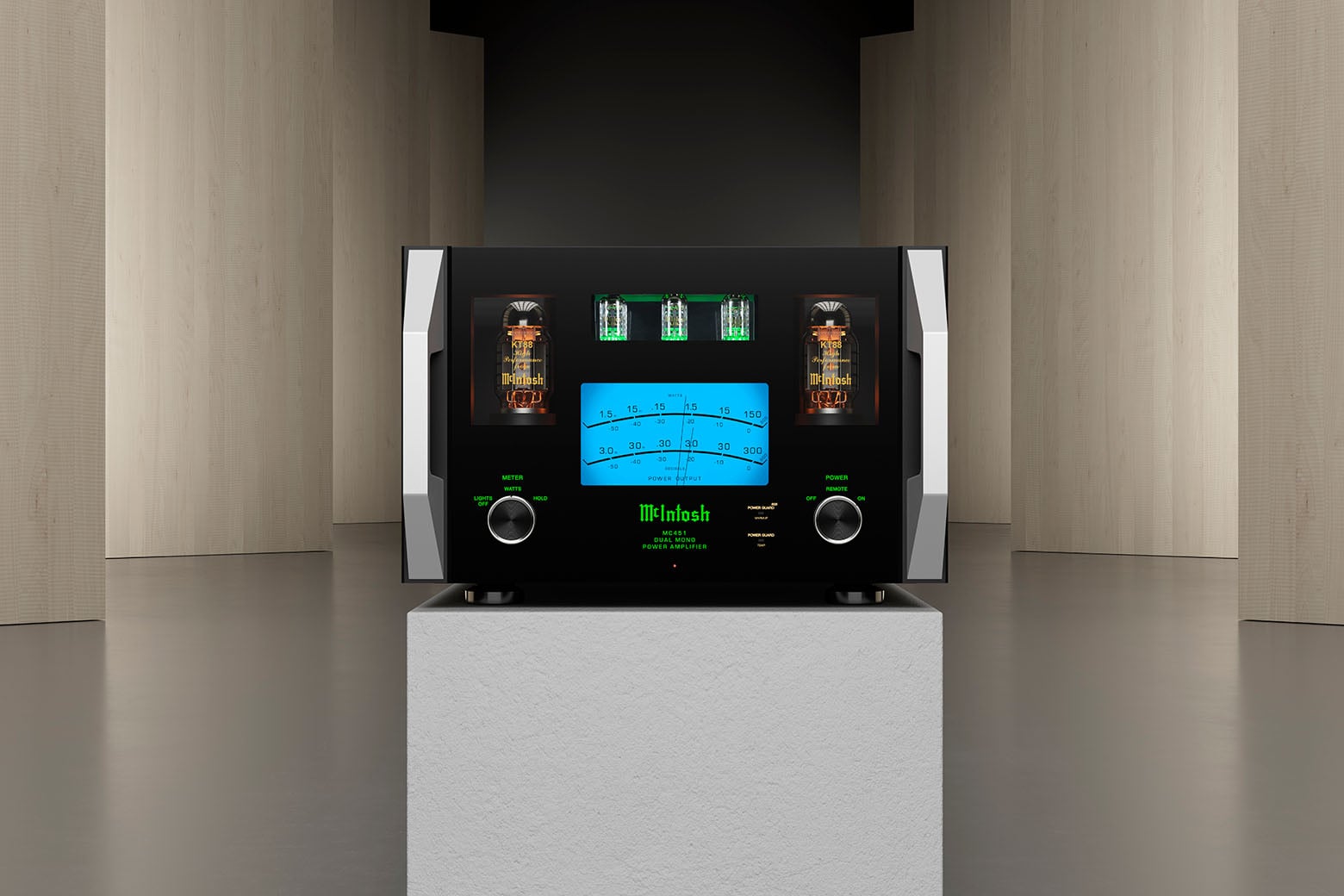
Three clear windows across the black-glass front panel provide views of the vacuum tubes, DualView meter, and internal presentation elements.
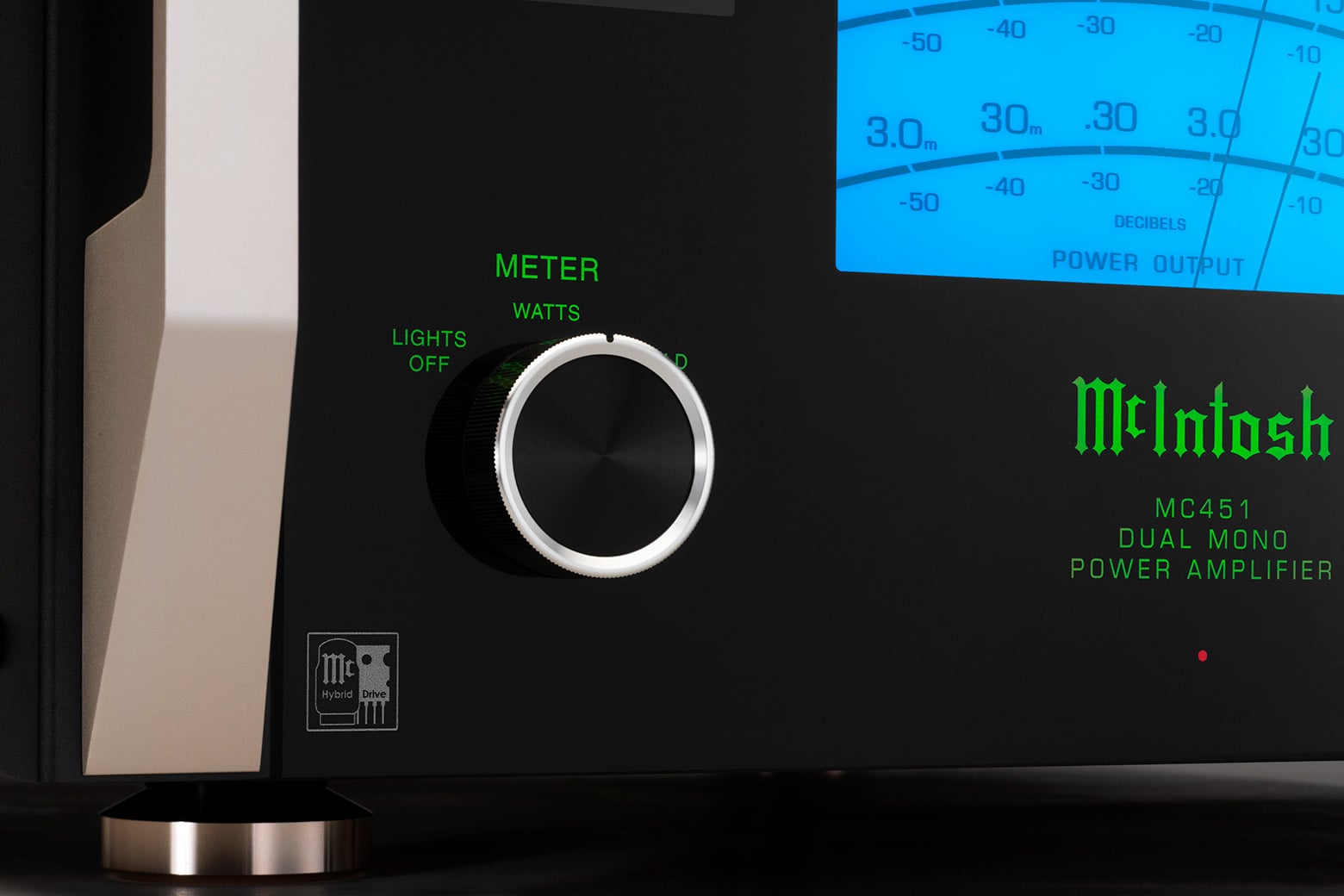
The MC451 also features illuminated lettering and logo, rotary controls, integrated aluminum handles, and a mirror-polished stainless steel chassis.
Across the top, glass inserts display circuit block diagrams and amplifier information—a detail that makes the engineering itself part of the visual design.
The result looks unmistakably McIntosh, but unlike almost anything else in the company's amplifier lineup.
The Grid's Take on the McIntosh MC451
The MC451 isn't simply another high-powered McIntosh amplifier. It's a solution to a very specific high-end audio problem.
Bi-amping can produce exceptional results with the right loudspeaker, but doing it properly with separate amplifiers and an external crossover can become complicated very quickly.
The MC451 essentially turns that entire concept into one purpose-built component.
We especially like the logic behind the 150-watt tube / 300-watt solid-state combination. The tube section handles the frequencies where many listeners value the character and presentation of vacuum tubes, while the solid-state section provides the power and control needed for the woofers.
And because both sections deliver their full rated power into 2, 4, or 8 Ohms, the MC451 can work with a broad range of compatible bi-ampable loudspeakers.
For someone already investing in a reference-level speaker capable of being properly bi-amplified, a pair of MC451s offers one of the most interesting amplifier configurations in the McIntosh lineup.
At The Grid HiFi & Home Theater, we can help determine whether your loudspeakers are appropriate for the MC451, configure the crossover and gain structure, and design the complete system around a properly matched pair.
Specifications
Electronic Specifications
FTC Power Output Rating
Solid State section: 300 W
Vacuum Tube section: 150 W
Power Output per Channel
Solid State section: 300 W 2, 4 or 8 ohms
Vacuum Tube section: 150 W into 2, 4 or 8 ohms
Number of Channels
1
Total Harmonic Distortion
Solid State section: 0.005% maximum harmonic distortion at any power level from 250 milliwatts to rated power, 20Hz to 20kHz
Vacuum Tube section: 0.5% maximum harmonic distortion at any power level from 250 milliwatts to rated power, 20Hz to 20kHz
S/N below rated output
Solid State section: 118dB
Vacuum Tube section: 112dB
Dynamic Headroom
Solid State section: 2.5dB
Vacuum Tube section: 1.2dB
Damping Factor
Solid State section: >40
Vacuum Tube section: >18
Rated Power Band
Solid State section: 20Hz to 20kHz
Vacuum Tube section: 20Hz to 20kHz
Frequency Response
Solid State section:
+0, -0.25dB from 20Hz to 20kHz
+0, -3dB from 10Hz to 100kHz
Vacuum Tube section:
+0, -0.5dB from 20Hz to 20kHz
+0, -3dB from 10Hz to 70kHz
Control
Remote Power Control
Yes
Multi-Channel DB25 Cable
N/A
Connectivity
Speaker Binding Post Type
Patented Solid Cinch™ Speaker Binding Posts
General Specifications
Circuit Configuration
Solid State section: Push-Pull Complementary
Vacuum Tube section: Unity Coupled
Circuit Design
Solid State and Vacuum Tube
Mono Bridge
No
Mono Parallel
No
Output Type
Solid State section: Autoformer™
Vacuum Tube section: Unity Coupled Output Transformer
Meters
DualView™ Power Output Meter
Meter Light Switch
Yes
Balanced Input
2 (1 Solid State or Mono, 1 Vacuum Tube)
Front Panel
Glass
Illumination
Direct LED
Chassis Style
Polished stainless steel & black painted steel
Weights & Dimensions
Unit Dimensions (W x H x D)
17-7/8" (45.4cm) x 11-13/16" (30cm) x 21-1/2" (54.6cm)
Unit Weight
133 lbs (60.3 kg)
Shipping Weight
159 lbs (72.1 kg)
FAQs
Please read our FAQs page to find out more.
Do you price match?
Yes. We match any authorised dealer, including big-box retailers. If you find the same product at a lower price, contact us and we'll match it.
Do you offer free shipping?
Yes — free shipping on every order, with 2-day delivery available on most products. Easy returns and exchanges are included.
Where is your showroom?
We're at 6362 Alder Drive, Houston, Texas. The showroom lets you hear and compare reference-level systems in person before making any decisions. If you're considering a larger purchase or installation, it's well worth the visit.
Can I buy online without visiting the showroom?
Yes. The full product range is available through the online store with free nationwide shipping. For more complex system builds, speaking with one of our advisers first tends to lead to a better result.
Do you offer financing?
Yes. Special financing is available through the BrandSource Credit Card for qualifying purchases, allowing you to spread payments over time with no annual fee. Promotional rebate savings are also available periodically. See the financing page for full details.
Do you install systems as well as sell equipment?
Yes — installation is central to what we do. We design and install whole-home audio and video, home theaters, media rooms, outdoor audio, lighting and motorised shades, and full smart home automation.
Do you provide support after installation?
Yes. We provide ongoing service and support to ensure systems continue performing as intended — not just on installation day, but over the long term.