


MartinLogan Neolith Electrostatic Speakers | The Grid HiFi
Pairs well with
MartinLogan Neolith Electrostatic Speakers | The Grid HiFi
If you have any questions, you are always welcome to contact us. We'll get back to you as soon as possible, within 24 hours on weekdays.
-
Shipping Information
Use this text to answer questions in as much detail as possible for your customers.
-
Customer Support
Use this text to answer questions in as much detail as possible for your customers.
-
FAQ’s
Use this text to answer questions in as much detail as possible for your customers.
-
Contact Us
Use this text to answer questions in as much detail as possible for your customers.
Overview
MartinLogan Neolith Electrostatic Loudspeakers
Complimentary White Glove Delivery • Travel Reimbursement*
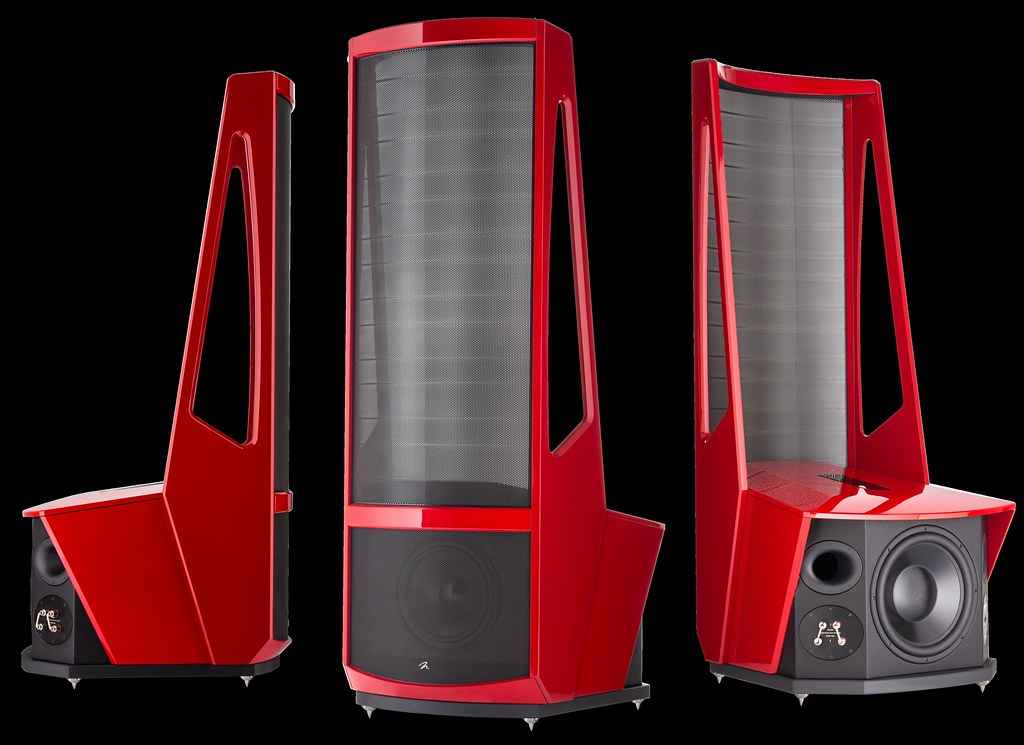
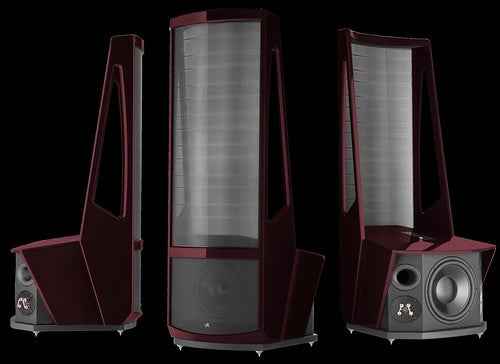
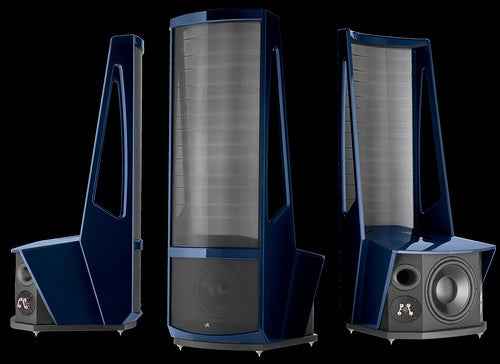
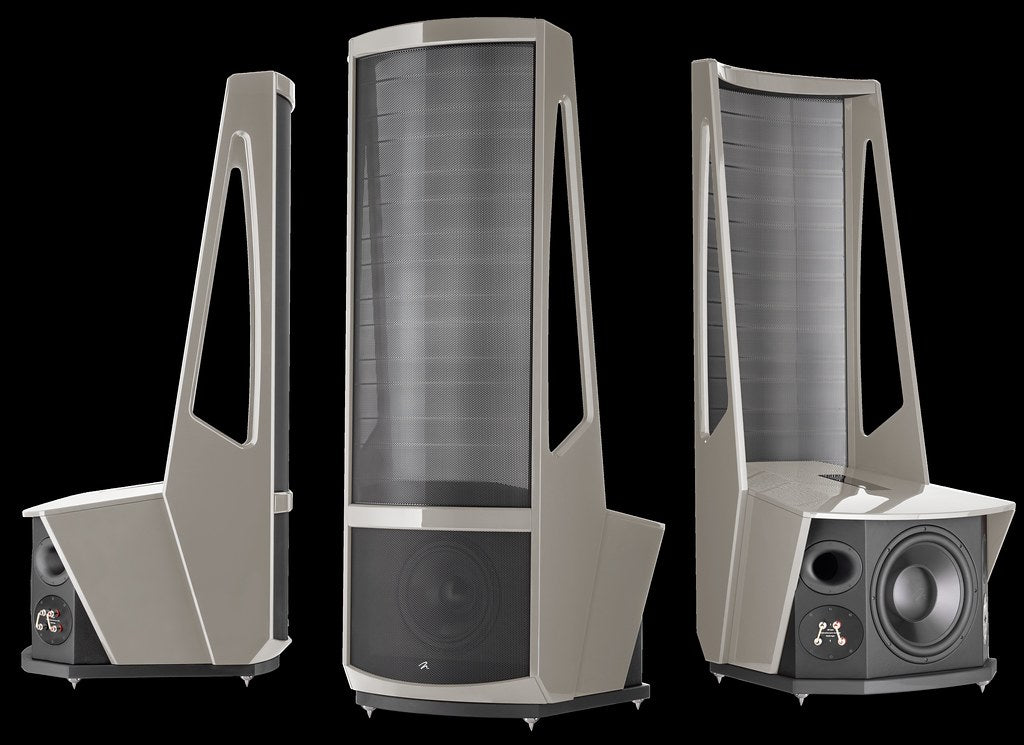
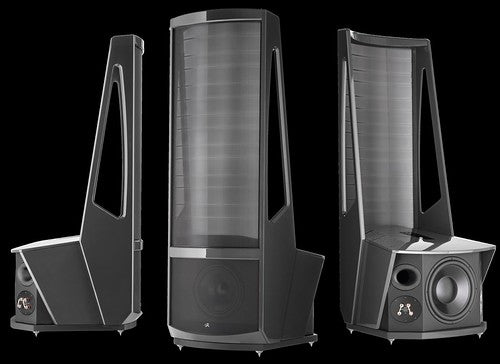
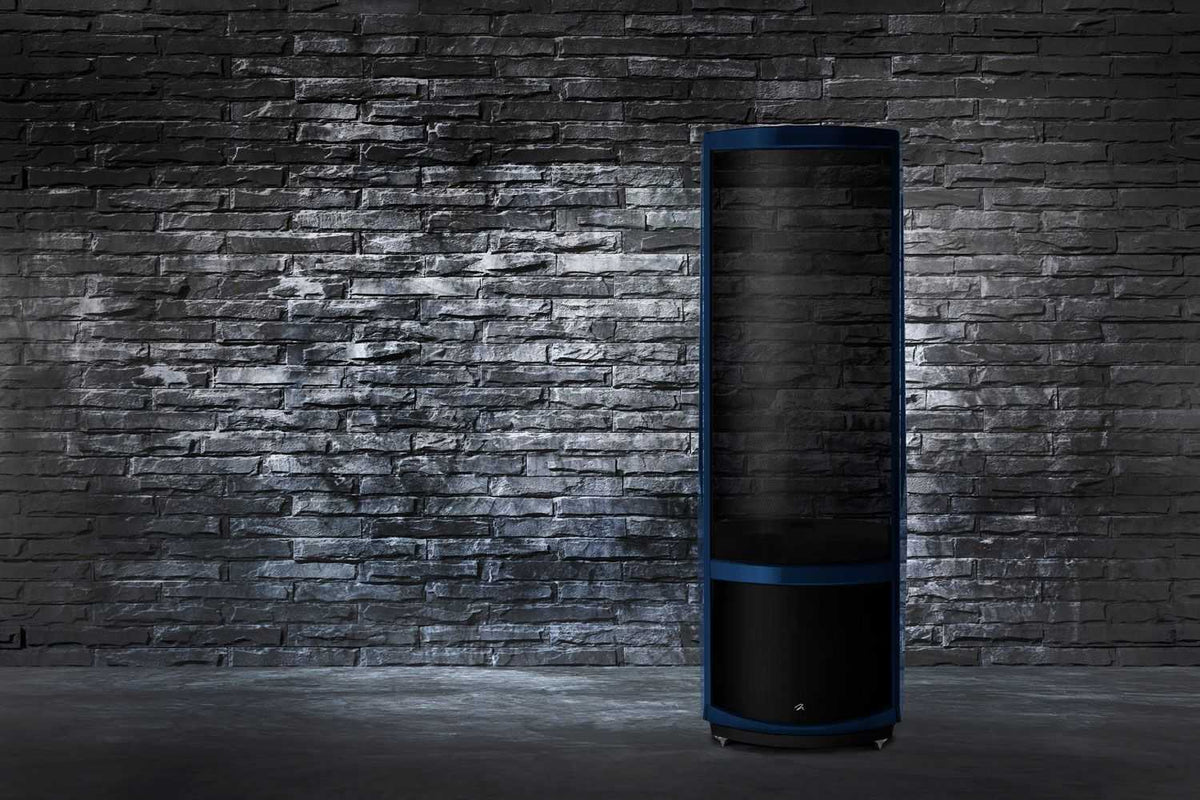
The MartinLogan Neolith is a statement-scale electrostatic loudspeaker built without the usual compromises imposed by size, weight or conventional driver architecture. Its centerpiece is an enormous 48 × 22-inch XStat CLS electrostatic transducer with 1,056 square inches of radiating area, responsible for reproducing nearly the entire midrange and high-frequency spectrum from a single ultra-light diaphragm.
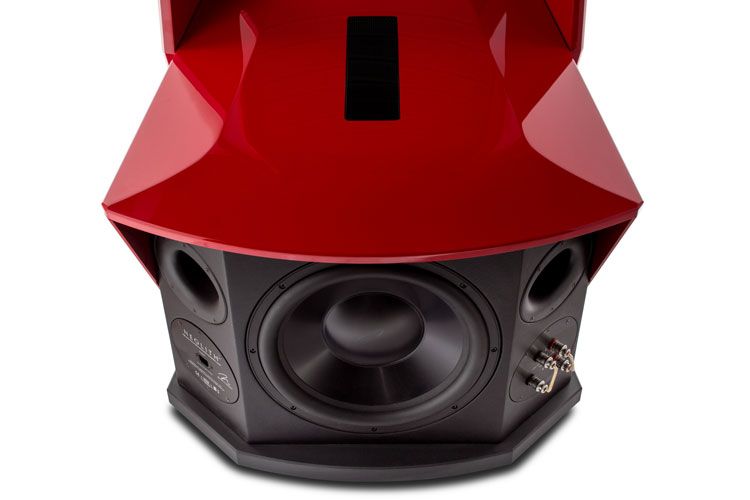
Below the electrostatic panel, MartinLogan combines two purpose-built dynamic drivers: a 12-inch front-firing sealed carbon-fiber mid-bass woofer and a 15-inch rear-firing ported aluminum-cone woofer. Together they extend the Neolith's specified response to 23 Hz, while the electrostatic panel continues through the upper frequencies to 22 kHz.
Neolith is entirely passive, leaving the choice of amplification with the system designer. It can be single-wired or bi-amplified and is rated for amplifiers from 20 to 1,300 watts per channel. Its 4-ohm nominal impedance falls to just 0.43 ohm at 20 kHz, making amplifier quality, current capability and stability essential.
At 74.8 inches tall, 385 pounds per speaker and nearly three feet deep, Neolith is not simply a larger electrostatic loudspeaker. It is a purpose-built reference system requiring the room, amplification and installation to be designed around it.
48 × 22-Inch XStat CLS Electrostatic Panel
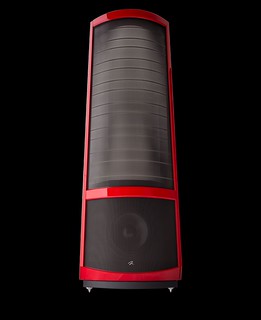
The defining element of Neolith is its massive XStat CLS electrostatic transducer.
Measuring 48 inches high by 22 inches wide, the panel provides 1,056 square inches of radiating area. MartinLogan states that its surface area is approximately 35% larger than the electrostatic panel used in the legendary Statement e2.
Unlike a conventional multi-driver loudspeaker that divides the midrange and treble among separate cone and dome drivers, Neolith's electrostatic diaphragm reproduces nearly the entire midrange and high-frequency spectrum.
This minimizes crossover transitions through a large portion of the frequencies responsible for vocals, instrumental timbre and spatial information.
How the Electrostatic Transducer Works
An electrostatic driver is fundamentally different from a conventional moving-coil loudspeaker.
An extremely lightweight conductive diaphragm is suspended between two perforated stators. The diaphragm maintains a constant electrostatic charge while the audio signal creates alternating electrical fields across the stators.
Those changing forces move the entire diaphragm.
Because the diaphragm itself is the moving element, there is no conventional voice coil, former or cone assembly attached to it. The moving mass is extremely low compared with a traditional dynamic driver.
The Neolith uses this principle across an unusually large radiating surface, allowing one diaphragm to reproduce a remarkably broad portion of the audible spectrum.
Curvilinear Line Source Technology
A large flat electrostatic panel naturally tends toward increasingly narrow horizontal dispersion.
MartinLogan addresses this through its proprietary Curvilinear Line Source, or CLS, geometry.
The Neolith panel incorporates a controlled horizontal curvature that creates a specified 30-degree horizontal dispersion pattern while retaining the advantages of a large electrostatic radiating surface.
Vertically, the 48-inch panel behaves as a controlled line source.
The combination provides broad horizontal coverage while limiting unnecessary vertical energy directed toward the floor and ceiling.
Dipole Radiation
The Neolith electrostatic panel operates as a dipole radiator.
Sound is produced from both the front and rear surfaces of the diaphragm, with the rear radiation opposite in phase to the front.
At the sides of the panel, these opposing wavefronts largely cancel. This reduces early lateral energy that would otherwise interact strongly with nearby side walls.
Behind the speaker, the rear wave becomes an important part of the listening-room interaction.
This is why Neolith placement is critical. Distance from the wall behind the speaker, toe-in, listening distance and room geometry all influence the final result.
Vacuum Bonded Panel Construction
MartinLogan manufactures its electrostatic panels using a proprietary Vacuum Bonding process.
The diaphragm, stators and structural elements are assembled under controlled pressure using an aerospace-grade adhesive. The process maintains uniform diaphragm tension and the precise tolerances required across such a large electrostatic surface.
The stators themselves must remain mechanically rigid while simultaneously allowing acoustic energy to pass through them.
MartinLogan's MicroPerf stator design uses tightly controlled perforations to maximize the usable radiating area without sacrificing the structural rigidity required to control the charged diaphragm.
ClearSpar Technology
The transparent horizontal elements visible across the panel are MartinLogan's ClearSpar spacers.
These reinforce the electrostatic assembly and help maintain consistent diaphragm spacing and tension across the width of the panel.
Their narrow profile is designed to provide structural support without creating significant visual or acoustic obstruction.
On a panel with more than 1,000 square inches of radiating surface, maintaining consistent mechanical geometry across the entire diaphragm is fundamental to predictable operation.
12-Inch Front-Firing Sealed Mid-Bass Driver
The transition from electrostatic reproduction to deep bass begins with a 12-inch front-firing mid-bass driver mounted in a sealed enclosure.
This is not a conventional paper-cone woofer.
MartinLogan uses a rigid carbon-fiber sandwich cone, high-excursion suspension and a substantial 3-inch copper-clad aluminum flat-wire voice coil.
The pole piece and area beneath the spider are vented to improve airflow and reduce power compression.
Its sealed alignment is particularly significant. The 12-inch driver is responsible for the critical transition between the dynamic bass system and the electrostatic panel, so transient behavior and control take precedence over simply maximizing bass output.
15-Inch Rear-Firing Woofer
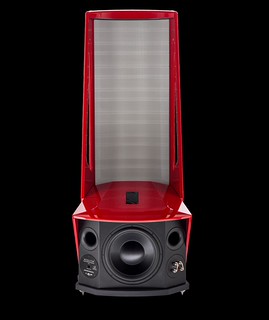
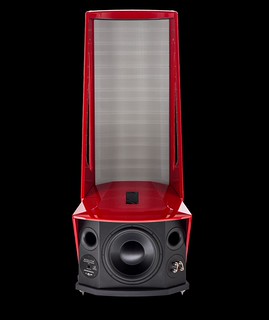
Deep bass is handled by a separate 15-inch rear-firing, ported woofer.
The driver uses a rigid aluminum cone, cast basket and high-excursion motor assembly. Its motor incorporates extensive venting, triple shorting rings and a four-layer voice coil designed to control distortion and compression as output increases.
Dividing bass reproduction between specialized 12-inch and 15-inch drivers allows the front woofer to concentrate on the transition to the electrostatic panel while the larger rear driver handles the deepest frequencies.
The complete system reaches a specified 23 Hz at ±3 dB.
Three-Way Hybrid Architecture
Neolith's crossover architecture divides the loudspeaker at 60 Hz and an adjustable 250 to 400 Hz transition.
The 15-inch woofer handles the deepest bass.
The 12-inch sealed driver covers the critical mid-bass region.
Above it, the enormous electrostatic panel reproduces nearly everything else.
This arrangement keeps conventional dynamic drivers concentrated in the frequency ranges where moving large volumes of air is essential while exploiting the extremely low moving mass and broad operating range of the electrostatic diaphragm throughout the midrange and treble.
Advanced Vojtko Crossover
The Neolith uses MartinLogan's Vojtko crossover topology, built with components selected for high power handling and signal integrity.
The high-pass network incorporates 1% tolerance resistors mounted to heatsinks, polypropylene capacitors, air-core inductors and dual toroidal audio transformers used to drive the electrostatic element.
The low-pass section uses 1% resistors and toroidal inductors and incorporates the Neolith's user-adjustable bass and distance controls.
The network remains completely passive, preserving the owner's ability to select amplification appropriate for the system.
Bass and Listening-Distance Adjustment
Neolith provides physical crossover adjustments that allow the speaker to be configured around the room.
Bass Control:
0 dB
-4 dB
-8 dB
Distance Control:
3 meters or less
4 meters
5 meters or greater
The bass adjustment helps compensate for the considerable effect room boundaries can have on low-frequency output.
The distance setting changes the integration of the dynamic woofer system with the electrostatic panel according to listening distance.
These are particularly valuable controls on a loudspeaker of this scale, where the relationship among panel radiation, woofer output, room boundaries and listener position becomes an integral part of system setup.
Phenolic Resin Polymer Structure
The Neolith's sculpted structural frame is manufactured from Phenolic Resin Polymer, a dense composite material selected for its mechanical strength and resistance to vibration.
This is especially important because the enclosure must support both an enormous electrostatic panel and two high-output dynamic bass drivers.
Reactive forces generated by the 12-inch and 15-inch woofers have the potential to excite the surrounding structure. Increasing the rigidity and mass of the baffle reduces its tendency to move in response.
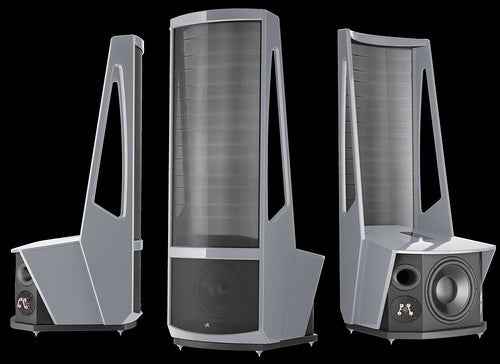
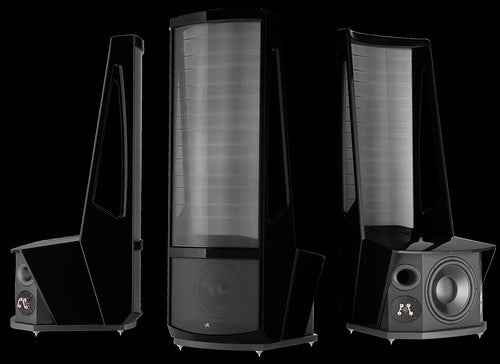
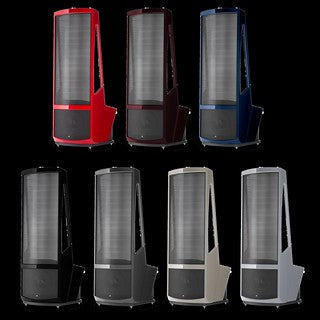
The woofer enclosure is finished in hand-applied soft leather, while the surrounding structure receives a premium automotive-grade finish.
Single-Wire or Bi-Amplified Operation
Neolith is a fully passive loudspeaker.
MartinLogan provides separate connections that allow the speaker to operate from a single amplifier channel or as a bi-amplified system.
Bi-amplification gives the system designer the ability to dedicate amplification separately to the electrostatic and bass sections.
That flexibility becomes particularly valuable at this level because the electrostatic panel presents very different electrical demands from the dynamic woofer system.
WBT Silver Binding Posts
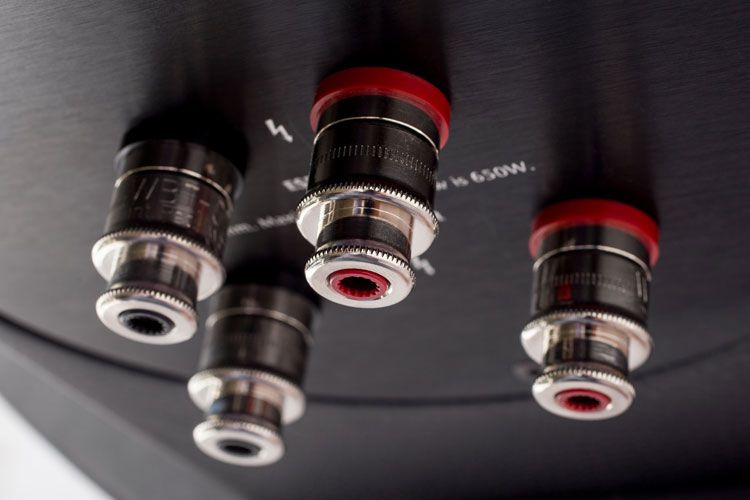
Signal connection is through WBT-0705Ag nextgen 5-way binding posts.
Their filigree signal conductors are manufactured from fine silver and engineered to minimize conductive mass and eddy-current effects.
MartinLogan specifies the terminals for 30 amps of continuous current and 200 amps of admissible peak current.
They accommodate the Neolith's single-wire and bi-amplified configurations while maintaining a high-quality mechanical and electrical connection for substantial loudspeaker cables.
Amplifier Matching Matters
Neolith has a nominal impedance of 4 ohms, but that specification tells only part of the story.
At 20 kHz, impedance falls to 0.43 ohm.
MartinLogan specifies compatibility with amplifiers rated for 4, 6 or 8-ohm loudspeakers and recommends amplifier power from 20 to 1,300 watts per channel, but the quality and stability of the amplifier are more important than selecting it by wattage alone.
An amplifier driving Neolith must remain composed into the unusual impedance behavior of a large electrostatic transducer while also providing the current required by the substantial dynamic bass section.
For that reason, amplifier matching should be considered part of the Neolith system design.
90 dB Sensitivity
Despite its demanding high-frequency impedance, Neolith is specified at 90 dB sensitivity with 2.83 volts at one meter.
The enormous electrostatic radiating area contributes to that relatively high sensitivity.
The speaker can therefore produce substantial acoustic output without relying exclusively on enormous amplifier wattage, although its scale and dynamic capability can take advantage of exceptionally powerful amplification when the room and listening requirements demand it.
Built for Large-Scale Systems
Each Neolith stands 74.8 inches tall, 30.3 inches wide and 34.2 inches deep.
Each speaker weighs 385 pounds.
Crated weight rises to approximately 600 pounds per speaker.
Those numbers have practical consequences.
Floor construction, access, doorway dimensions, equipment placement, listening distance and professional installation should all be considered before delivery. This is not a loudspeaker that should simply be shipped to a residence and positioned after arrival.
The room and installation are part of the system.
Technical Details
| Specification | MartinLogan Neolith |
|---|---|
| Product Type | Reference Hybrid Electrostatic Loudspeaker |
| System Architecture | Passive Hybrid Electrostatic |
| Frequency Response | 23 Hz to 22 kHz ±3 dB |
| Electrostatic Transducer | XStat CLS |
| Panel Dimensions | 48 × 22 in / 122 × 56 cm |
| Electrostatic Radiating Area | 1,056 in² / 6,832 cm² |
| Horizontal Dispersion | 30° |
| Vertical Dispersion | 48 in / 122 cm line source |
| Front Mid-Bass Driver | 12 in / 30.5 cm |
| Front Driver Enclosure | Sealed |
| Front Driver Cone | Carbon-fiber sandwich |
| Front Driver Voice Coil | 3 in copper-clad aluminum flat wire |
| Rear Bass Driver | 15 in / 38.1 cm |
| Rear Driver Cone | Rigid aluminum |
| Rear Bass Alignment | Ported |
| Crossover Frequencies | 60 Hz / adjustable 250 to 400 Hz |
| Sensitivity | 90 dB / 2.83 V / 1 m |
| Nominal Impedance | 4 Ω |
| Minimum Published Impedance | 0.43 Ω at 20 kHz |
| Recommended Amplifier Power | 20 to 1,300 W per channel |
| Crossover | Advanced-topology Vojtko |
| Bass Adjustment | 0 / -4 / -8 dB |
| Distance Adjustment | ≤3 m / 4 m / ≥5 m |
| Wiring | Single-wire / bi-amplification |
| Binding Posts | WBT-0705Ag nextgen 5-way |
| Binding Post Conductor | Fine silver |
| Binding Post Continuous Current | 30 A |
| Binding Post Peak Current | 200 A |
| Frame Material | Phenolic Resin Polymer |
| Woofer Cabinet Finish | Soft leather |
| Electrostatic Panel Power Draw | 1 W standby / 15 W maximum each |
| LED Control | On / Dim / Off |
| Height | 74.8 in / 189.9 cm |
| Width | 30.3 in / 76.9 cm |
| Depth | 34.2 in / 87 cm |
| Weight | 385 lb / 175 kg each |
| Crated Weight | 600 lb / 273 kg each |
| Crate Dimensions | 39.7 × 39 × 82.6 in / 100.8 × 99 × 210 cm |
MartinLogan Neolith at The Grid HiFi
The Grid HiFi in Houston specializes in reference two-channel systems built around extraordinary loudspeakers such as the MartinLogan Neolith.
Neolith demands more than simply choosing an expensive amplifier. Its 0.43-ohm high-frequency impedance, dipole electrostatic radiation, dual dynamic bass system and 385-pound construction make amplifier selection, room placement and installation inseparable from the loudspeaker itself.
We can engineer the complete system around Neolith, including reference amplification, digital and analog sources, cabling, power infrastructure, equipment support, dedicated electrical requirements, speaker positioning and final system optimization.
For customers outside Houston, we can coordinate the project from system design through delivery and final installation.
Complimentary White Glove Delivery • Travel Reimbursement*
Qualifying purchasers may receive airfare reimbursement for your private audition.
Considering Neolith? Experience it properly before you decide. Call The Grid HiFi at (713) 218-8120 to arrange your private consultation.
*Restrictions apply. Contact us for details.
FAQs
Please read our FAQs page to find out more.
Do you price match?
Yes. We match any authorised dealer, including big-box retailers. If you find the same product at a lower price, contact us and we'll match it.
Do you offer free shipping?
Yes — free shipping on every order, with 2-day delivery available on most products. Easy returns and exchanges are included.
Where is your showroom?
We're at 6362 Alder Drive, Houston, Texas. The showroom lets you hear and compare reference-level systems in person before making any decisions. If you're considering a larger purchase or installation, it's well worth the visit.
Can I buy online without visiting the showroom?
Yes. The full product range is available through the online store with free nationwide shipping. For more complex system builds, speaking with one of our advisers first tends to lead to a better result.
Do you offer financing?
Yes. Special financing is available through the BrandSource Credit Card for qualifying purchases, allowing you to spread payments over time with no annual fee. Promotional rebate savings are also available periodically. See the financing page for full details.
Do you install systems as well as sell equipment?
Yes — installation is central to what we do. We design and install whole-home audio and video, home theaters, media rooms, outdoor audio, lighting and motorised shades, and full smart home automation.
Do you provide support after installation?
Yes. We provide ongoing service and support to ensure systems continue performing as intended — not just on installation day, but over the long term.