Goldmund Rhea Passive Floorstanding Speakers
The Goldmund Rhea Passive is a reference 3-way passive floorstanding loudspeaker created for listeners who want Goldmund’s contemporary speaker engineering while retaining complete freedom to choose their own amplification. Its architecture combines a soft-dome tweeter, 7-inch midrange driver and 12-inch woofer, vented bass loading, an exceptionally sophisticated passive crossover network, Goldmund Proteus LS modeling and the company’s Mechanical Grounding construction. Goldmund| The Art of Sound
With extension to 27Hz (-6dB), a 6-ohm nominal impedance and substantial 123 kg / 271 lb construction per speaker, Rhea Passive is a serious full-range loudspeaker designed around high-current reference amplification and large-scale two-channel systems. Goldmund| The Art of Sound
True 3-Way Passive Architecture
Each Rhea Passive uses three dedicated drivers:
1 × soft-dome tweeter
1 × 7-inch midrange driver
1 × 12-inch woofer
Unlike Goldmund’s Rhea Active, there is no internal Telos amplification, DSP or digital crossover. Rhea Passive uses a sophisticated analogue passive crossover network, leaving amplification entirely in the hands of the system designer. Goldmund| The Art of Sound
That makes Rhea Passive particularly compelling for an existing reference system built around components such as Goldmund’s Mimesis preamplifiers and Telos power amplifiers, or other high-performance amplification.
27Hz–25kHz Frequency Response
Goldmund specifies the Rhea Passive frequency response as:
27Hz (-6dB) → 25kHz. Goldmund| The Art of Sound
The 12-inch woofer and vented enclosure provide genuine low-frequency extension without requiring the speaker to rely on electronic bass correction.
For many two-channel systems, that makes Rhea Passive capable of operating as a true full-range loudspeaker without a subwoofer. A properly integrated subwoofer system can still be added where greater infrasonic extension or room-specific bass management is desired.
Goldmund Proteus LS Modeling
Rhea Passive was developed using Goldmund Proteus LS, the company’s proprietary loudspeaker modeling software.
Proteus LS models critical electroacoustic behavior including system impedance, volume velocity, driver membrane displacement and sound pressure. Goldmund uses this data to optimize the drivers, enclosure and crossover as a complete system rather than treating them as isolated components. Goldmund| The Art of Sound
This is particularly significant in the passive Rhea because the precision normally associated with Goldmund’s DSP-controlled active loudspeakers must instead be achieved through physical driver behavior and the passive crossover network.
Independent Crossover Board for Each Driver
Goldmund goes considerably further than a conventional single-board passive crossover.
Each Rhea Passive driver receives a dedicated independent crossover board, allowing the electrical network for the tweeter, midrange and woofer to be optimized individually. Goldmund| The Art of Sound
Goldmund uses premium crossover components including:
MKP capacitors
Non-inductive film resistors
Custom heat sinks
Ultra-thick copper air-core inductors
The passive components are intentionally specified for power levels several times greater than the power they are expected to handle in normal operation. Goldmund's objective is to prevent transient voltage or current demands from driving crossover components into saturation. Goldmund| The Art of Sound
Pure Copper Air-Core Inductors
The crossover's air-core inductors use ultra-thick, pure oxygen-free copper.
Air-core construction avoids the magnetic saturation behavior that can occur in inductors built around magnetic cores. Goldmund combines the inductors with specialized PCB construction and mechanical mounting intended to minimize vibration-induced distortion. Goldmund| The Art of Sound
This level of crossover engineering is one of the defining differences between Rhea Passive and a conventional passive floorstanding speaker.
Mono-Amp, Bi-Amp or Tri-Amp
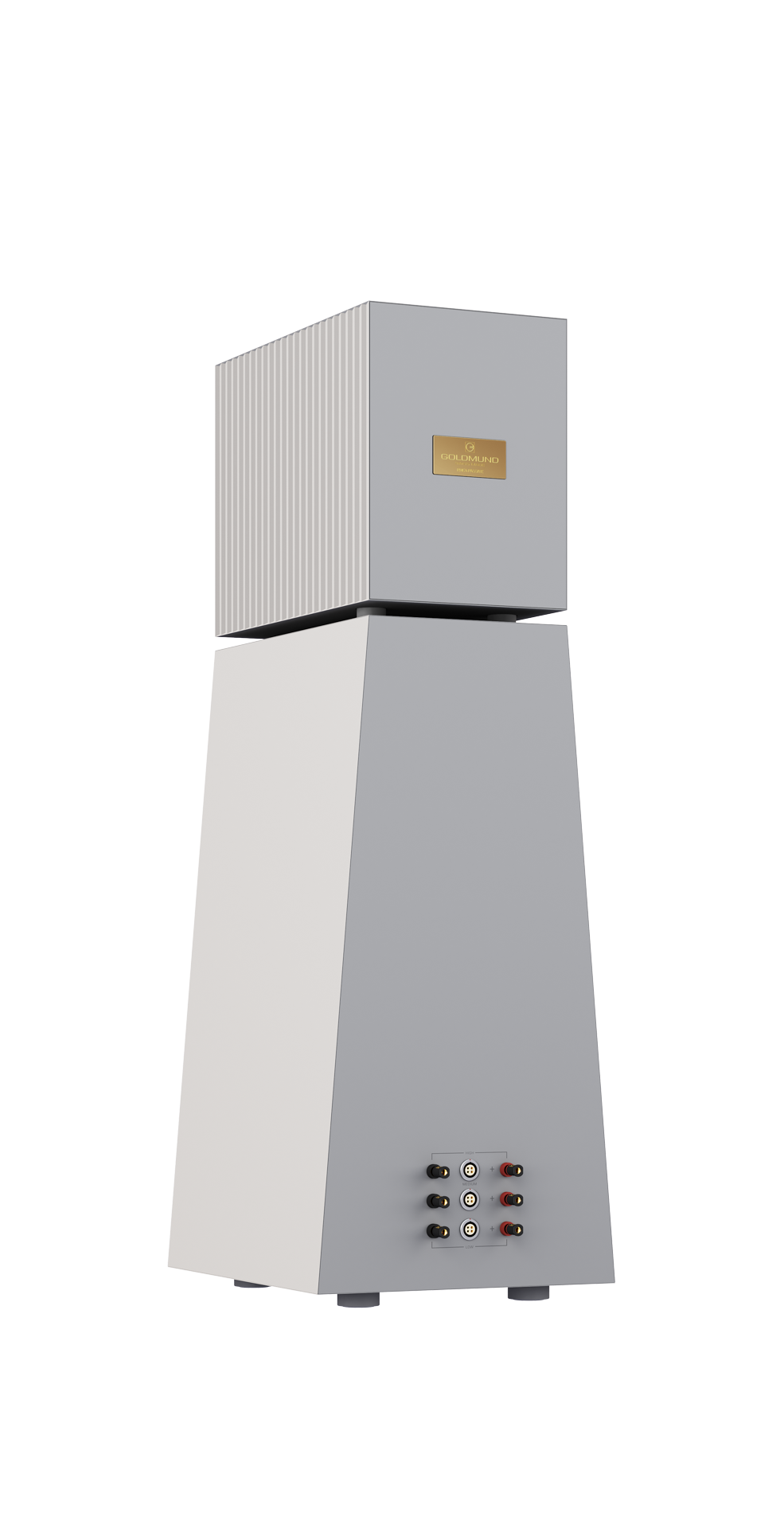
Rhea Passive supports three amplification configurations:
Mono-Amplification — one amplifier channel drives the complete loudspeaker.
Bi-Amplification — separate amplifier channels can be assigned to different sections of the loudspeaker.
Tri-Amplification — three amplifier channels can be used, allowing the tweeter, midrange and woofer sections to receive dedicated amplification. Goldmund| The Art of Sound
This gives the Rhea Passive considerable system-building flexibility.
A conventional stereo installation can begin with a single stereo amplifier or pair of monoblocks, while an uncompromising installation can expand into multi-amplifier configurations without replacing the loudspeakers.
Designed for Fast, High-Current Amplification
Goldmund specifically recommends high-slew-rate, high-dynamic-range amplification for Rhea Passive.
According to the manufacturer, slower amplifiers may have difficulty maintaining optimal control over the speaker’s fast drivers, compromising transient response and fidelity. Goldmund| The Art of Sound
This makes amplifier matching unusually important.
The published impedance is:
6Ω nominal
4Ω minimum. Goldmund| The Art of Sound
Those figures are not exceptionally difficult in isolation, but Goldmund's emphasis is on extracting the full transient and dynamic performance of the loudspeaker rather than simply finding an amplifier capable of producing sound into the load.
Natural Partner for Goldmund Telos Amplification
The Rhea Passive creates a compelling route into a fully separates-based Goldmund system.
A reference configuration could combine:
Eidos Streamer → Reference DAC → Mimesis Reference Preamplifier → Telos Monoblocks → Rhea Passive
For a simpler system, one of Goldmund’s Telos integrated amplifiers can consolidate preamplification and power amplification.
At the upper end, the Rhea Passive's support for bi- and tri-amplification creates considerable room for system development.
Mechanical Grounding
At 123 kg / approximately 271 lb per speaker, the Rhea Passive already possesses enormous physical mass. Goldmund goes further with its proprietary Mechanical Grounding construction. Goldmund| The Art of Sound
A central grounding tip provides a controlled mechanical path intended to channel unwanted vibrational energy away from the loudspeaker structure and into the supporting surface. Goldmund's objective is to prevent cabinet energy from being stored and released as audible coloration. Goldmund| The Art of Sound
This is the same fundamental mechanical philosophy Goldmund applies across its loudspeakers and electronics.
Ultra-Thick Aluminum Construction
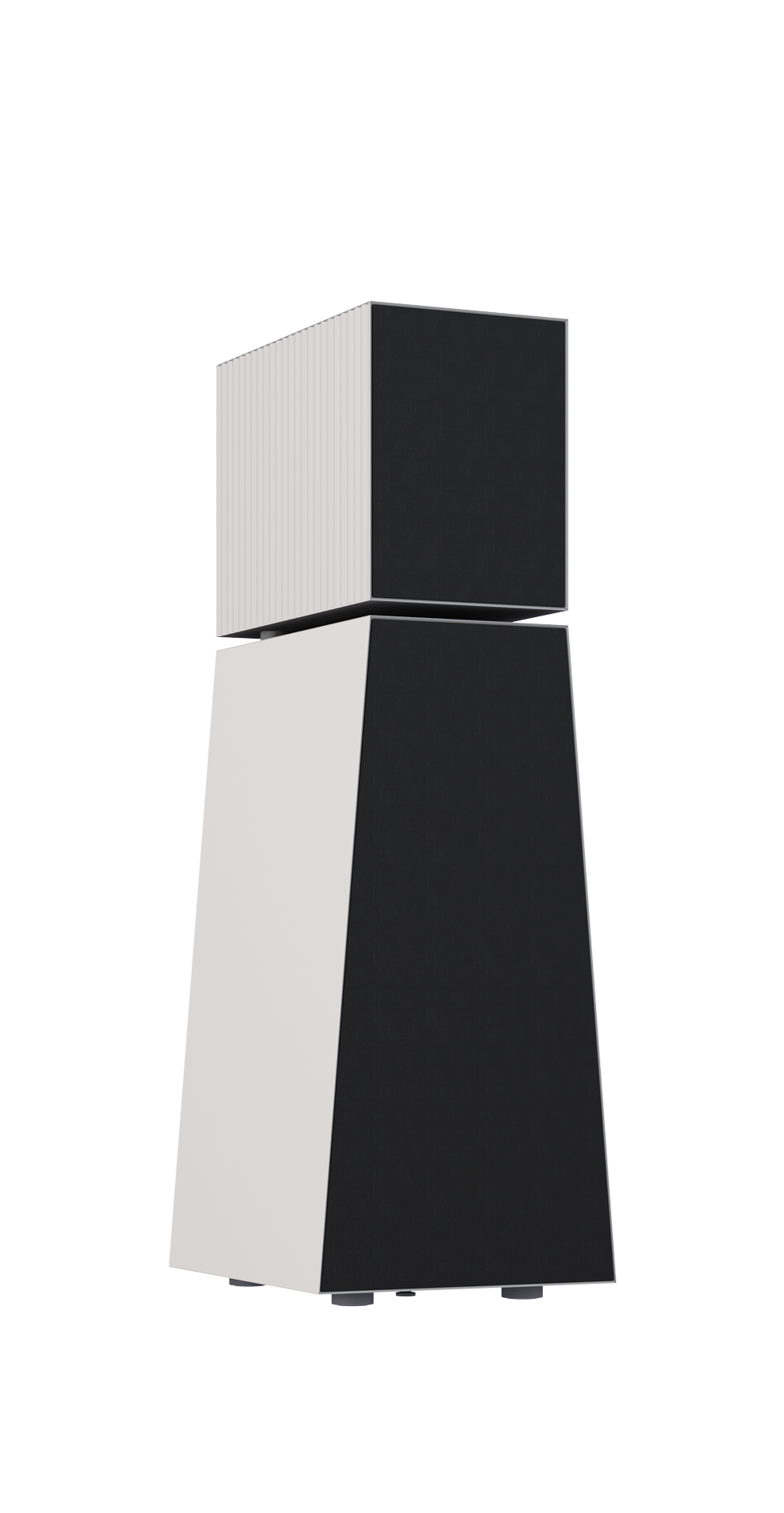
The Rhea Passive enclosure is constructed from substantial aluminum panels with invisible seams and precise 45-degree joins.
Goldmund applies two different surface treatments to emphasize the speaker's architecture:
Micro-blasted vertical surfaces
Brushed horizontal surfaces
The sculpted, wave-like side panels interact with light while the extremely rigid aluminum structure provides the physical foundation for the drivers and crossover system. Goldmund| The Art of Sound
The result is intentionally architectural rather than a conventional rectangular loudspeaker cabinet.
271 Pounds per Speaker
Each Rhea Passive measures:
17.72" W × 53.15" H × 21.26" D
45 × 135 × 54 cm
and weighs:
123 kg / approximately 271 lb per speaker. Goldmund| The Art of Sound
A stereo pair therefore weighs approximately 542 lb before packaging.
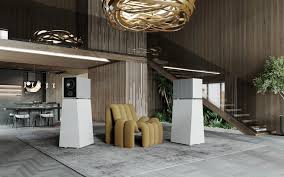
Placement, floor construction and delivery access should be considered during system planning rather than after purchase.
Individual Flight Cases
Each Rhea Passive is supplied in its own dedicated custom flight case for protection during transportation and future storage. Goldmund| The Art of Sound
The packed dimensions per speaker are:
31.5" W × 64.2" H × 24.4" D
80 × 163 × 62 cm
with a gross packed weight of:
195 kg / approximately 430 lb per speaker. Goldmund| The Art of Sound
That means a complete pair approaches 860 lb in its transport cases, making professional delivery and placement particularly relevant for this model.
Grey or Black Finish
The current Rev. B specification sheet lists:
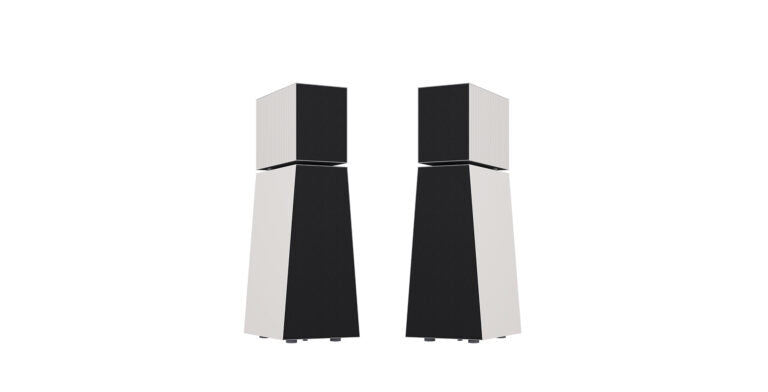
Standard: Grey enclosure with black grilles
On Request: Black enclosure with black grilles. Goldmund| The Art of Sound
Goldmund's 2026 catalog additionally references all-grey availability on request. Because the dedicated current specification sheet is more specific, I would make Grey/Black the standard Shopify configuration and treat any additional finish as special order subject to confirmation. Goldmund| The Art of Sound
Rhea Passive vs. Rhea Active
These speakers share the same basic dimensions and driver complement, but they are fundamentally different system architectures.
|
Rhea Passive |
Rhea Active |
| Architecture |
3-Way Passive |
3-Way Active |
| Tweeter |
Soft Dome |
Soft Dome |
| Midrange |
7" |
7" |
| Woofer |
12" |
12" |
| Frequency Response |
27Hz–25kHz |
26.5Hz–25kHz |
| Amplification |
External |
650W Telos per speaker |
| Crossover |
Passive, independent boards |
DSP |
| Leonardo Time Correction |
No |
Yes |
| Digital Input |
No |
S/PDIF |
| Wireless Audio |
No |
Yes |
| Weight |
123 kg / 271 lb |
125 kg / 276 lb |
The active Rhea incorporates 175W for the tweeter, 175W for the midrange and 300W for the woofer, plus DSP and Leonardo Time Correction. Rhea Passive replaces that integrated electronic architecture with its elaborate passive crossover system and external amplification. Goldmund| The Art of Sound
Neither is simply a higher or lower version of the other. They address two different approaches to building a reference system.
Goldmund Rhea Passive Technical Specifications
| Specification |
Goldmund Rhea Passive |
| Product Type |
3-Way Passive Floorstanding Loudspeaker |
| Tweeter |
1 × Soft Dome |
| Midrange |
1 × 7" |
| Woofer |
1 × 12" |
| Bass Loading |
Vented |
| Frequency Response |
27Hz (-6dB) → 25kHz |
| Nominal Impedance |
6Ω |
| Minimum Impedance |
4Ω |
| Crossover |
Custom Passive, Independent Board per Driver |
| Crossover Capacitors |
MKP |
| Crossover Resistors |
Non-Inductive Film / Heat-Sinked |
| Inductors |
Ultra-Thick Pure-Copper Air-Core |
| Loudspeaker Modeling |
Goldmund Proteus LS |
| Amplification |
External |
| Amplifier Configurations |
Mono-Amp / Bi-Amp / Tri-Amp |
| Mechanical System |
Goldmund Mechanical Grounding |
| Enclosure |
Heavy Aluminum Construction |
| Dimensions W × H × D |
17.72 × 53.15 × 21.26 in. |
| Metric Dimensions |
45 × 135 × 54 cm |
| Weight per Speaker |
123 kg / approx. 271 lb |
| Pair Weight |
Approx. 246 kg / 542 lb |
| Standard Finish |
Grey Enclosure / Black Grilles |
| Special-Order Finish |
Black Enclosure / Black Grilles |
| Packaging |
Individual Custom Flight Case |
| Flight Case per Speaker |
31.5 × 64.2 × 24.4 in. |
| Gross Packed Weight |
195 kg / approx. 430 lb each |
Goldmund does not publish sensitivity, crossover frequencies or a conventional recommended amplifier wattage range in the current Rhea Passive Rev. B specification sheet. I would leave those specifications off The Grid listing rather than filling them with estimates. Goldmund| The Art of Sound
Goldmund Rhea Passive at The Grid HiFi
The Goldmund Rhea Passive gives the traditional reference-system customer access to Goldmund's modern loudspeaker platform without committing to internal amplification or DSP. Its 12-inch woofer, 7-inch dedicated midrange, 27Hz extension, Proteus LS development, independent crossover networks and 271-pound aluminum construction make it a genuine statement loudspeaker rather than simply a passive adaptation of Rhea Active. Goldmund| The Art of Sound
The Grid HiFi can design the complete Rhea Passive system around Goldmund Telos amplification and Mimesis preamplification, reference digital and analog sources, turntables, cabling, power and equipment support, including amplifier matching and final system setup.
Considering the Goldmund Rhea Passive? Call The Grid HiFi at (713) 218-8120 to arrange a private audition and build the complete reference system around it.