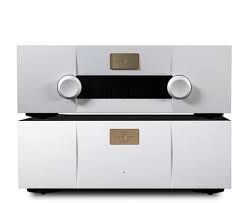
Goldmund Mimesis Reference Analogue Preamplifier
The Goldmund Mimesis Reference is Goldmund’s flagship pure analogue stereo preamplifier, engineered for reference systems where preserving the source signal takes priority over digital processing or feature count. Its architecture combines Class A output-stage drivers, seven individually adjustable line inputs, separate left- and right-channel power supplies, dedicated analogue and control power circuits, ultra-low-noise components and an external power-supply chassis. Goldmund| The Art of Sound
This is an important distinction within the current Goldmund range: the Mimesis Excellence and Mimesis Signature accommodate both digital and analogue sources, while the Mimesis Reference remains deliberately analogue-only. Goldmund positions it at the top of its current preamplifier collection. Goldmund| The Art of Sound
Pure Analogue Reference Architecture
The Mimesis Reference does not contain a DAC or digital audio inputs. Goldmund has instead concentrated the design around the shortest, lowest-noise analogue signal path possible.
The amplification architecture uses Class A output-stage drivers with ultra-low-noise active and passive components selected to minimize Total Harmonic Distortion, Intermodulation Distortion and Transient Intermodulation Distortion. Goldmund| The Art of Sound
For a reference system built around vinyl, reel-to-reel, a dedicated external DAC or other high-end analogue sources, that specialization is a significant part of the Reference's appeal.
0.0002% THD
Goldmund specifies extraordinarily low distortion from the Mimesis Reference.
At 1Vrms output, using an 80kHz measurement bandwidth and 600-ohm termination, the current specification lists:
THD, unbalanced input to unbalanced output: 0.0002%
with the figure remaining flat with frequency. Goldmund| The Art of Sound
This is exactly what a reference preamplifier should accomplish: provide source selection, gain management and volume control while introducing as little additional character as possible.
0.2Hz–1.2MHz Bandwidth
The Mimesis Reference has exceptional published bandwidth:
20Hz–20kHz: ±0dB
0.2Hz–1.2MHz: ±3dB
Goldmund specifies these figures for output levels up to 10Vrms. Goldmund| The Art of Sound
The importance of a 1.2MHz upper bandwidth isn't reproducing ultrasonic music. Extremely wide amplifier bandwidth supports Goldmund's emphasis on transient accuracy and phase behavior by ensuring the audio band sits comfortably inside the circuit's operating range.
Less Than 300ns Propagation Delay
Goldmund specifies propagation delay below 300 nanoseconds, stable with frequency from DC through 200kHz. Goldmund| The Art of Sound
That figure is especially relevant given Goldmund's longstanding emphasis on time-domain accuracy. Rather than judging a preamplifier exclusively by frequency response and harmonic distortion, the company also considers how rapidly and consistently the circuitry passes changing musical information.
Seven Individually Adjustable Line Inputs
The Mimesis Reference provides seven analogue line inputs, with independent input-level adjustment of:
-12dB to +12dB for each input. Goldmund| The Art of Sound
This allows sources with significantly different output voltages to be level-matched. Instead of a high-output DAC playing dramatically louder than a phono stage or other analogue component at the same volume setting, each input can be optimized individually.
Nominal input sensitivity is 100mV, saturation level is 5Vrms, and nominal input impedance is 39kΩ. Goldmund| The Art of Sound
Balanced & Unbalanced Connectivity
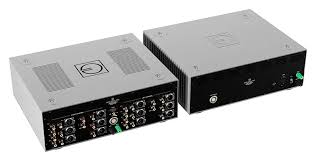
The Mimesis Reference supports both balanced and single-ended reference systems.
Maximum input levels are:
9.6Vrms balanced
4.8Vrms unbalanced
Maximum output levels are likewise:
9.6Vrms balanced
4.8Vrms unbalanced
with a low 50-ohm output impedance. Goldmund| The Art of Sound
That low output impedance makes the Reference particularly well suited to driving Goldmund's Telos monoblock amplifiers and facilitates longer interconnect runs in large reference installations.
Separate Left & Right Power Supplies
Power architecture is one of the defining elements of the Mimesis Reference.
Goldmund gives the left and right channels dedicated power supplies rather than relying on a single shared supply. The design also separates the analogue and control/digital circuitry and uses custom audio-grade transformers for the individual sections. Goldmund| The Art of Sound
The purpose is straightforward: electrical demands from one channel or control circuit should have as little opportunity as possible to modulate the sensitive analogue audio circuitry.
External Power-Supply Chassis
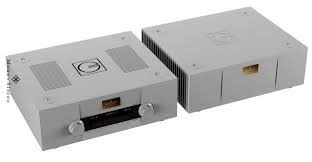
Goldmund further isolates the sensitive preamplifier circuitry by separating the principal power-supply hardware from the audio chassis.
This two-chassis approach physically distances transformer vibration and electromagnetic activity from the low-level analogue signal circuitry.
It also makes the Mimesis Reference a substantial physical component rather than a conventional single-box preamp—something worth making clear in The Grid listing and photography.
Ultra-Low-Noise Components
Goldmund describes the Mimesis Reference as using carefully selected ultra-low-noise active and passive components throughout its signal path. Goldmund| The Art of Sound
The design objective is not merely lowering the conventional noise-floor measurement. In a highly resolving system, power-supply contamination, thermal instability, electromagnetic interference and interaction between individual circuit sections can all obscure extremely low-level musical information.
Goldmund addresses these areas individually rather than relying on one headline circuit technology.
Individually Cooled Low-Noise Op-Amps
Thermal management receives unusual attention.
Each low-noise operational amplifier on the audio board receives a custom heat sink, while the main shielding structure itself also functions as a heat-dissipation system. Goldmund machines the heatsink assembly from a solid piece of aluminum to establish direct mechanical contact between the op-amps and dissipator. Goldmund| The Art of Sound
Maintaining consistent operating temperature helps stabilize the electrical behavior of the circuitry while the shielding simultaneously reduces electromagnetic interference.
CNC-Machined Internal Heat Management
The power-supply section uses a dedicated in-house heatsink engineered to maximize available surface area.
Goldmund also specifies customized components within the supply, including components using oxygen-free gold, as part of its effort to provide stable power to the audio stages. Goldmund| The Art of Sound
This degree of thermal engineering is unusual for a preamplifier, where output power is relatively low, but it reflects how aggressively Goldmund approaches circuit stability.
Heavy 12mm Mechanical Construction
The current Mimesis Reference introduced Goldmund's newer mechanical design language with substantially heavier construction.
Chassis sections reach 12mm thickness, replacing the approximately 6–8mm structures used in previous designs. The top panel uses Goldmund's no-screw design, while the side panels share the sculptural language of the company's current loudspeaker and electronics range. Goldmund| The Art of Sound
The substantial aluminum structure provides mechanical rigidity while also contributing to electromagnetic shielding and thermal control.
Silver Grey or Matte Black
The Mimesis Reference is available in Goldmund's signature:
Silver Grey
Matte Black
For international-market models, Goldmund currently describes the top-panel accent ring as matching grey, while Chinese-market units receive a gold accent. Goldmund notes that finish availability, lead times and configuration can vary. Goldmund| The Art of Sound
For Shopify, I would therefore make Grey and Black the primary finish choices and avoid presenting the gold accent ring as a standard U.S. option unless your distributor confirms it.
Designed for Reference Telos Systems
The natural system architecture for the Mimesis Reference is straightforward:
Source → Mimesis Reference → Telos Monoblocks → Passive Loudspeakers
For digital playback, a dedicated reference DAC would perform conversion before feeding the Mimesis Reference through its analogue inputs.
For vinyl, a separate phono stage is required. Goldmund's current Mimesis PH3.8 NextGen supports both moving-magnet and moving-coil cartridges and is the natural Goldmund counterpart for an all-Goldmund analogue front end. Goldmund| The Art of Sound
This separation of functions is deliberate. The Reference is not attempting to be a streamer, DAC, phono stage and preamplifier in one chassis. It is designed to perform analogue line-level preamplification at the highest level Goldmund offers.
Goldmund Mimesis Reference Technical Specifications
| Specification |
Goldmund Mimesis Reference |
| Product Type |
Reference Analogue Stereo Preamplifier |
| Audio Architecture |
Pure Analogue |
| Output Stage |
Class A Drivers |
| Line Inputs |
7 |
| Individual Input Adjustment |
-12dB to +12dB |
| Nominal Input Level |
100mV |
| Input Saturation Level |
5Vrms |
| Nominal Input Impedance |
39kΩ |
| Maximum Balanced Input |
9.6Vrms |
| Maximum Unbalanced Input |
4.8Vrms |
| Nominal Output |
1.55Vrms |
| Maximum Balanced Output |
9.6Vrms |
| Maximum Unbalanced Output |
4.8Vrms |
| Output Impedance |
50Ω |
| Frequency Response |
20Hz–20kHz ±0dB |
| Extended Frequency Response |
0.2Hz–1.2MHz ±3dB |
| Propagation Delay |
<300ns, DC–200kHz |
| THD — Unbalanced |
0.0002% |
| Channel Power Architecture |
Dedicated Left & Right Supplies |
| Analogue / Control Power |
Separated |
| Power Supply |
Separate External Chassis |
| Chassis Construction |
Heavy Aluminum, up to 12mm panels |
| Standard Finishes |
Silver Grey / Matte Black |
The electrical specifications above are taken from Goldmund's current November 2025 specification sheet, rather than relying on older retailer data. Goldmund| The Art of Sound
A Note on the Published Specifications
There is one area where I would be careful with the Shopify listing. Goldmund's older Reference manual contains additional specifications, while the newer 2025 sheet is more selective. The core figures—1.55Vrms nominal output, 9.6/4.8Vrms balanced/unbalanced maximum output, 50-ohm output impedance, 39k-ohm input impedance, seven independently adjustable inputs, 0.2Hz–1.2MHz bandwidth and <300ns propagation delay—remain consistent. Goldmund| The Art of Sound
For that reason, I would prioritize the current 2025 manufacturer sheet and avoid filling gaps with third-party specifications.
Mimesis Reference vs. Mimesis Excellence
The difference is more fundamental than simply one model being above another.
|
Mimesis Reference |
Mimesis Excellence |
| Architecture |
Analogue Only |
Digital + Analogue |
| Position |
Flagship Analogue |
Reference Digital/Analogue |
| DAC |
None |
Custom Goldmund DAC |
| PCM/DSD |
— |
Up to 768kHz / DSD512 |
| Analogue Inputs |
7 line inputs |
RCA + XLR |
| External Power Supply |
Yes |
Yes |
| Extended Bandwidth |
0.2Hz–1.2MHz |
0.2Hz–530kHz |
| Primary Purpose |
Ultimate analogue preamplification |
Integrated digital + analogue control |
Goldmund's current collection explicitly categorizes the Mimesis Reference as Analogue Preamplifier, while the Excellence and Signature are Digital / Analogue Preamplifiers. Goldmund| The Art of Sound
That gives us a much stronger SEO and sales angle than simply calling Reference the "better" preamp: Reference is the uncompromised Goldmund choice for the customer intentionally building a separates-based analogue signal chain.
Goldmund Mimesis Reference at The Grid HiFi
The Goldmund Mimesis Reference belongs at the center of a system where every component is chosen independently for maximum performance. Its pure analogue architecture, Class A output-stage drivers, 0.0002% published THD, 0.2Hz–1.2MHz bandwidth, sub-300ns propagation delay, seven individually adjustable line inputs and extensively separated power architecture make it Goldmund's definitive analogue control component. Goldmund| The Art of Sound
The Grid HiFi can build the complete reference system around the Mimesis Reference, including Goldmund Telos 2800 and other Telos monoblocks, the Mimesis PH3.8 NextGen phono stage, reference DACs and streamers, turntables, Marten and other reference loudspeakers, cabling, power and equipment support.
Considering the Goldmund Mimesis Reference? Call The Grid HiFi at (713) 218-8120 to arrange a private audition and design a complete reference system around it.